
 Kristen
Before you apply for your next credit card, it is important to know how issuers consider your application. The criteria for credit card acceptance is a bit of a mystery. However, generally, these are some of the guidelines that come into play:
Creditworthiness
- Credit score — the biggest factor; most premium cards want 700+ (often 740+ for top-tier cards)
- Credit history length — how long your oldest account has been open, average age of accounts
- Payment history — any late payments, collections, or derogatory marks
- Credit utilization — how much of your available revolving credit you’re using (lower is better)
- Credit mix — variety of account types (cards, loans, mortgage, etc.)
Income & Debt
- Income — issuers want to see you can handle the credit line; they may ask for total household income
- Debt-to-income ratio — existing debt obligations vs. income
- Employment status — though self-employed and retired applicants can qualify too
Application Behavior
- Recent inquiries — too many hard pulls in a short window signals risk
- New accounts opened — Chase’s 5/24 rule is the most famous issuer-specific restriction here
- Velocity rules — some issuers (Amex, Citi, Chase) limit how frequently you can open cards with them specifically
Issuer-Specific Rules Each bank layers on its own overlays beyond standard credit factors, for example:
- Chase — 5/24 (no approval if you’ve opened 5+ cards in 24 months across all issuers)
- Amex — once-per-lifetime welcome bonus rule; typically limits you to 5 Amex credit cards at once
- Citi — 1 new card per 8 days, 2 per 65 days; bonus restrictions within 24–48 months per card family
- Capital One — pulls all 3 bureaus; limits to 2 Capital One cards total
- Barclays — heavily scrutinizes recent inquiries and relationship history
Existing Relationship
- Whether you already bank with the issuer (checking, savings, mortgage) can help
- Your history with that specific issuer — previous delinquencies or closed accounts can hurt
I would like to touch on a few of these points, which you should keep in mind before applying for your next card.
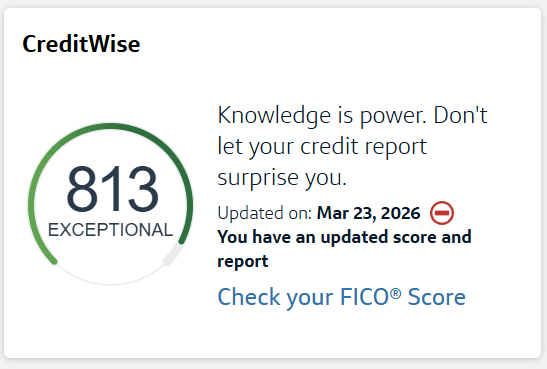
- Credit Score – it is a myth that having too many cards will hurt your credit score. For years, my husband and I shared a Costco credit card as our only card. Now, between the two of us, we have 17 credit cards. Some business and some personal. Our credit score has actually gone UP and I am completely comfortable at where we are and with applying for another new card soon.
- Credit History Length – closing your oldest card may be a bad idea as it decreases your credit history length. If you no longer wish to use the card and it carries a fee, call the issuer to see if you can downgrade to a fee free card that will keep the account open date preserved. We plan to always keep that Costco card open since we’ve had it for more than twenty years.
- Chase 5/24 Rule – An unofficial but well-established policy that prevents you from being approved for most Chase credit cards if you’ve opened five or more new credit card accounts — across any issuer, not just Chase — within the past 24 months. So even if your credit score is excellent, Chase will typically deny your application automatically if you’ve been on an aggressive card-opening spree. The rule exists because Chase wants to avoid approving applicants who are churning cards primarily for welcome bonuses. Certain business cards (including most Chase Ink cards) don’t count toward your 5/24 total, but they do require you to be under 5/24 to get approved.
We put together this tool to help you calculate your 5/24 status. In order to use the tracker, download this template. To use the template, click the link and then hit the down arrow in the upper right corner. Delete the sample data and enter your own and save as a CSV. Then upload it via the “upload CSV” tab. After upload you will see where your P1 and P2 (Player 1 and Player 2) stand as far as the Chase 5/24 rule. If you are a Single Player, no need to fill out that column. The tracker will put all the data in P1.
It is a good idea to keep this file saved as you open and close cards so you can come back to this tool for updates. If you are not sure when you’ve opened a card, you can use a credit report to determine the dates. I have used Credit Karma to pull a free report in the past.
If you have any questions on how to use the tool, feel free to reach out to us via “Ask a Question”. We hope it will help guide you a bit in deciding when to apply for that next card!